
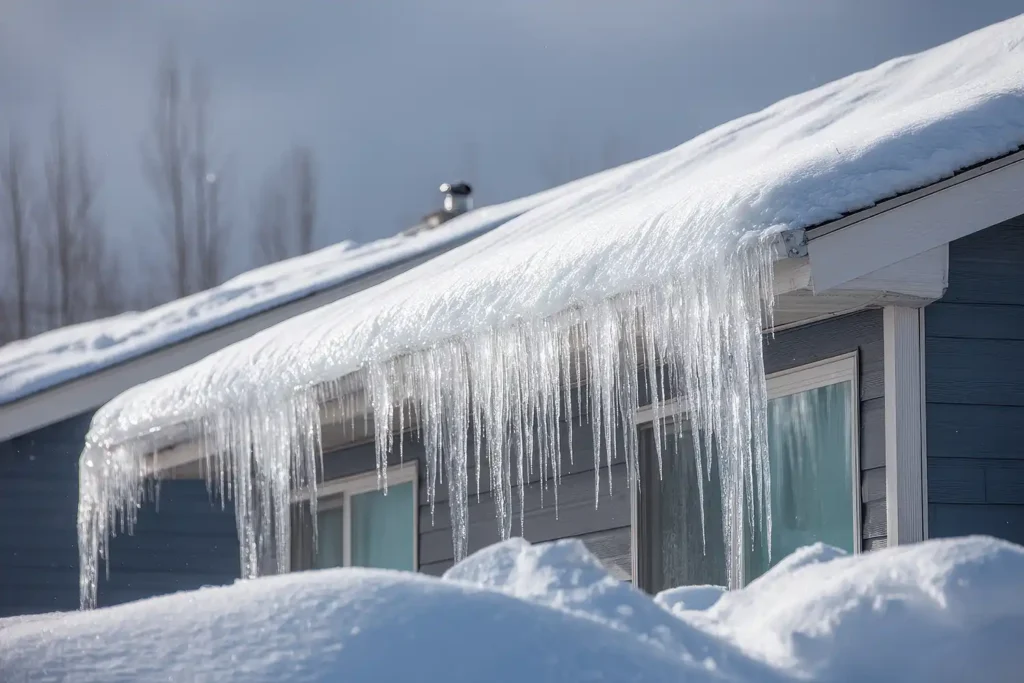
Winter is here and so is the snow.
With heavy snowfall already piling up, it’s a good time to think ahead about protecting your home before small issues turn into expensive repairs.
Last winter saw record levels of snow fall and many homeowners across our region dealt with unusually high snow buildup. That led to a surge in problems like roof damage and water leaks caused by snow weight and ice dams and record levels of snow damage and ice damming claims. While most home insurance comprehensive policies do cover this type of damage, going through a claim is is something no one wants to experience. Repairs can be disruptive, stressful, and time-consuming.
The good news is there are simple steps you can take to lower your risk.
Why Snow Load and Ice Dams Are a Problem
Snow load refers to the weight of snow sitting on your roof. If too much builds up, it can strain the structure and cause damage.
Ice damming happens when snow melts on a warm roof and then refreezes near the edges. That ice blocks melting snow from draining properly, which can force water back under shingles and into your home.
Both situations can lead to:
Roof damage
Water leaks inside the house
Wet insulation and ceilings
Costly and inconvenient repairs
Simple Ways to Protect Your Home This Winter
1. Clear snow from your roof — safely
Pay extra attention to roof valleys where snow tends to collect.
Don’t let snow build up to extreme levels.
Use the right tools or hire a professional to avoid injury or damage to your roof.
2. Keep roof vents uncovered
Make sure snow removal doesn’t block vents or exhausts.
Covered vents can trap moisture, contribute to ice buildup, and reduce heating efficiency.
3. Be careful where you pile snow
Avoid stacking snow against your home.
Melting snow near the foundation can seep into basements.
Snow piles can also block air intakes, furnace exhausts, or dryer vents, creating safety risks.
4. Check sheds, carports, and temporary structures
Items like sheds, fabric shelters, and portable carports often aren’t built to hold heavy snow.
These structures can collapse under the weight.
Clearing snow or taking down temporary structures can help prevent damage.
Coverage for detached or temporary structures can differ depending on your insurance policy, so it’s worth being extra cautious.
A Little Prevention Goes a Long Way
Taking simple, preventative steps now can help protect your home, reduce the chance of damage, and save you from unexpected repairs later in the winter.
At McLean & Dickey, we’ve been helping Ontario homeowners prepare for winter since 1922. Whether you’re reviewing your property insurance policy, updating your coverage, or insuring your first home, we’re here to help. Make sure that you’re ready for winter and reach out to us for a quote.