
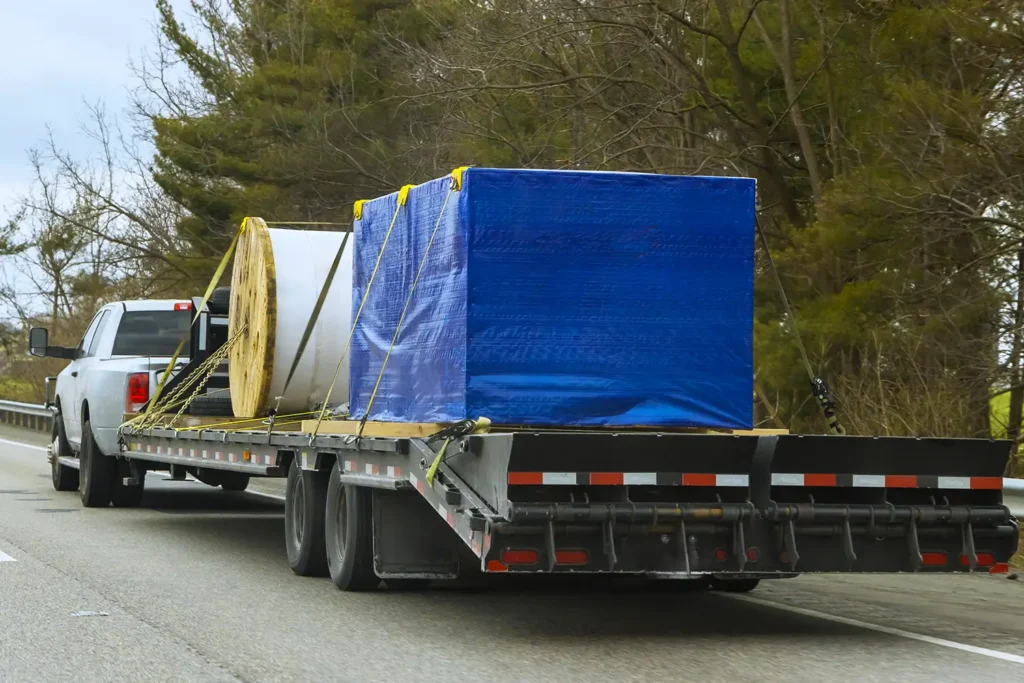
Picture this: you run a growing landscaping or construction business in Simcoe County. You hook a dual-axle dump trailer filled with aggregate to your three-quarter-ton work truck and head south down Highway 400. Flashing enforcement lights pull you onto the shoulder at an inspection station. You expect a routine check, but instead, the Ministry of Transportation (MTO) officer asks to see your CVOR certificate. You do not have one, assuming it only applies to long-haul semi-trailers. Within minutes, you are facing steep fines, your work truck is parked on the roadside, and your business operations are halted.
For hundreds of business owners, tradespeople, and fleet managers across Ontario, discovering what a CVOR is happens under stressful, costly circumstances. Beyond provincial fines, operating without the proper registration or accumulating safety infractions can jeopardize your commercial auto insurance, leading to surcharges or even policy cancellations.
Understanding the Commercial Vehicle Operator’s Registration (CVOR) system is essential for protecting your livelihood, your drivers, and your commercial fleet insurance.
What Does CVOR Stand For and What Is It?
CVOR stands for Commercial Vehicle Operator’s Registration. It is a mandatory carrier safety program administered by the Ministry of Transportation under Ontario Regulation 424/97 of the Highway Traffic Act. The province’s regulatory requirements are outlined in the official Ontario Ministry of Transportation CVOR Guide.
The CVOR program monitors and evaluates the safety performance of commercial vehicle operators traveling on Ontario roadways. In the eyes of the province, an “operator” (or carrier) is the business entity or individual responsible for the operation of the commercial vehicle, the driver’s conduct, and the condition of the equipment, regardless of whether they own, lease, or rent the vehicle.
The province tracks your commercial safety performance over a rolling 24-month window. Every on-road inspection, moving violation, equipment defect, and reportable collision involving your vehicles is documented on your company’s public and private CVOR abstract
Who Needs a CVOR Certificate in Ontario?
Many business owners mistakenly believe CVOR certificates are reserved strictly for 18-wheel tractor-trailers. In reality, the threshold is significantly lower and catches many contractors, trades, and service businesses off guard.
In Ontario, you must register for and carry a valid CVOR certificate if you operate:
- Trucks or combinations with a Registered Gross Weight (RGW), Gross Vehicle Weight Rating (GVWR), or actual weight exceeding 4,500 kilograms (9,920 lbs.). This includes pickup trucks towing heavy trailers, flatbeds, and dump trucks.
- Buses configured with a seating capacity of 10 or more passengers.
- Tow trucks, regardless of their gross weight rating.
- Farm-plated commercial vehicles that meet or exceed the 4,500 kg threshold.
Weight Thresholds at a Glance
| Vehicle Configuration | Weight Threshold | CVOR Required? | Key Consideration |
|---|---|---|---|
| Standard Light Truck | Under 4,500 kg (9,920 lbs.) | Personal or light business use without heavy towing. | Personal or light business use without heavy towing. |
| Truck & Heavy Trailer Combination | Combined weight over 4,500 kg | Yes | Combined actual weight or Registered Gross Weight (RGW) triggers mandatory CVOR registration |
| Personal-Use Pickup Truck | Under 6,500 kg (14,330 lbs) | No | Must have an unmodified factory box and carry no commercial tools or cargo. |
| Tow Truck | Any weight rating | Yes | Mandatory for all tow operators in Ontario regardless of GVWR. |
| Commercial Passenger Bus | 10+ passenger capacity | Yes | Required for all passenger transport over 9 seats. |
Don't Make This Mistake
The most common CVOR violation in Central Ontario happens when a commercial contractor couples an ordinary three-quarter-ton (2500-series) or one-ton (3500-series) pickup truck to a tandem-axle trailer. Even if the truck alone has an RGW under 4,500 kg, the moment you attach a trailer, the combined weight rating applies. A 3,800 kg truck attached to a 3,000 kg utility trailer creates a combined gross weight of 6,800 kg, putting the combination well over the legal limit and triggering mandatory CVOR registration.
Critical Exemptions
Under Ontario law, personal-use pickup trucks are generally exempt from CVOR requirements provided:
- The pickup truck has a manufacturer’s GVWR of 6,500 kg (14,330 lbs.) or less.
- The vehicle is fitted with the original, unmodified manufacturer-installed pickup box.
- The truck is being used for strictly personal, non-commercial purposes (carrying no commercial cargo, wholesale inventory, or commercial business equipment).
If you are using that same truck to transport materials to a client job site in Barrie or haul tools between projects in Muskoka, the vehicle is operating in a commercial capacity and loses its non-commercial exemption if the weight limits are met.
Driver Abstract vs. Company CVOR Abstract
To understand how compliance works, you must differentiate between driver records and operator records:
| Record Type | What It Tracks | Who Holds It | Why It Matters |
|---|---|---|---|
| Driver Abstract (MVR) | Individual driving history, demerit points, speeding tickets, impaired charges, licence suspensions. | The individual driver. | Used by employers and insurers to evaluate an individual driver's safety risk. |
| Company CVOR Abstract | Fleet collisions, commercial vehicle mechanical defects, roadside inspection reports, moving convictions across all company vehicles. | The corporate entity or sole proprietor carrier. | Used by the MTO and commercial insurance underwriters to determine fleet compliance and overall business risk profile. |
When an employee driving a company truck is issued a ticket for speeding, failing to obey a road sign, or operating with an insecure load, that event is recorded in two places:
- Points and fines apply to the driver’s personal licence.
- Safety points register against your company’s CVOR abstract.
Even if your driver was behind the wheel, the Ministry holds your business directly accountable for failing to supervise, train, and enforce road safety standards.
How the 24-Month Rolling Safety Point System Works
The CVOR system monitors events on a 24-month rolling window. Points enter your abstract on the date of conviction or inspection and remain active for two years. The MTO assigns safety points across three primary categories:
Roadside Vehicle Inspections and Mechanical Defects
Commercial vehicles are subjected to roadside mechanical inspections by MTO enforcement officers and OPP commercial safety divisions. Inspections follow the North American Standard Out-of-Service Criteria. If an officer finds critical safety defects, such as worn brakes, worn tire tread, cracked chassis frames, or faulty cargo straps, points are applied against your CVOR record, and the vehicle may be placed immediately Out of Service (OOS).
Driver Moving Convictions
Moving violations committed in a commercial vehicle, including speeding, improper lane changes, following too closely, distracted driving, and hours-of-service violations—accumulate CVOR points based on the severity of the offence.
Reportable Collisions
Any collision involving your commercial vehicle that results in injury, death, or property damage exceeding provincial reporting thresholds is recorded on your CVOR record, regardless of whether the driver was charged. While preventable collisions carry the heaviest operational scrutiny, an accumulation of collision incidents signals poor fleet risk control to both regulators and insurance carriers.
MTO Carrier Safety Rating Tiers
The MTO calculates an overall safety violation percentage by comparing your accumulated points against your fleet size and total annual travel distance. Based on this performance, the province assigns one of five carrier ratings:
- Excellent: Outstanding safety record with comprehensive maintenance, low defect ratios, and consistent inspection pass rates. Carriers often hold this rating after passing a full MTO facility audit.
- Satisfactory: Good safety record meeting provincial compliance standards. Carriers maintain steady operational controls and standard safety practices.
- Satisfactory – Unaudited: The default baseline tier for new CVOR certificate holders. The operator meets basic requirements but has not yet undergone a comprehensive MTO on-site facility audit.
- Conditional: The warning tier. Operators fall into Conditional status when their violation rate exceeds acceptable thresholds, when they fail an MTO facility audit, or following an intervention hearing. The operator is placed on notice, and corrective action plans are mandated.
- Unsatisfactory: The critical tier. The carrier’s safety rating has breached provincial safety standards. The MTO suspends or revokes the carrier’s operating authority, stripping the company of its legal right to operate commercial motor vehicles on Ontario roadways.
How CVOR Performance Directly Impacts Commercial Insurance
Your CVOR safety rating and commercial fleet insurance rates are inextricably linked. Commercial auto insurers do not just price policies based on the make and model of your work vans; they underwrite the operational integrity of your entire business.
Insurance regulation in Ontario emphasizes risk-based pricing governed by fair market principles established through the Financial Services Regulatory Authority of Ontario (FSRA) Commercial Auto Insurance Framework. When an underwriter evaluates your commercial automobile policy, your official MTO CVOR abstract serves as an open report card on operational risk.
The Cost of a "Conditional" Rating
When an operator slips from Satisfactory to Conditional, the insurance consequences are immediate:
- Policy Surcharges: Standard insurance markets may issue mandatory surcharges ranging from 50% to over 200% on vehicle liability and physical damage coverages.
- Carrier Non-Renewals: Mainline commercial insurers routinely issue notices of non-renewal to Conditional carriers upon policy expiry. If an insurer determines an operator presents unmanaged loss frequency, they are under no obligation to maintain fleet terms.
- High-Risk Substandard Placement: Operators facing non-renewal must often turn to facility or high-risk specialty commercial markets, where premiums are higher and payment terms require substantial upfront financing.
According to risk analyses published by HUB International, commercial insurance underwriters utilize CVOR and regulatory data as a direct baseline of fleet risk maturity. Unchecked CVOR points signal poor operational oversight to carriers, transforming a stable operational budget into an unsustainable overhead expense.
Fortunately, proactive operational controls yield clear returns. Benchmark data published by Element Fleet Management shows that commercial enterprises implementing structured risk management frameworks and fleet safety protocols achieve a 15% to 25% reduction in overall operational loss exposure and premium overhead.
Navigating Central Ontario Transport Risks: Highways 11 & 400
Operating commercial vehicles across Orillia, Barrie, Midland, and the Muskoka region presents unique environmental and operational challenges:
- Winter Highway Corridors: Navigating Highway 11 through Gravenhurst or Highway 400 along the shores of Georgian Bay involves sudden squalls, black ice, and blowing snow. Even minor single-vehicle ditch incidents result in reportable collisions on your CVOR record if police attend the scene.
- Seasonal Weight Bans and Thaws: Spring brings reduced load limits (half-load restrictions) to secondary township roads throughout Muskoka and Simcoe County. Overloading an axle during spring thaw conditions can lead to aggressive CVOR mechanical charges.
- Rigorous MTO Enforcement Stations: The regional inspection scale facilities (such as those along Highway 400) maintain thorough mechanical inspections. Rusted brake lines, improperly adjusted slack adjusters, or unsecured equipment trailers result in instant roadside out-of-service tickets.
Best Practices to Keep Your CVOR Clean
Protecting your CVOR safety rating requires a deliberate, documented risk mitigation strategy across your daily operations:
- Implement Strict Pre-Trip and Post-Trip Inspections: Require all drivers to complete a daily vehicle inspection report (DVIR) adhering to Ontario Schedule 1 standards before leaving the yard. Address minor mechanical faults before they become roadside out-of-service penalties.
- Screen Driver Abstracts Annually: Pull updated driver abstracts (MVRs) for every employee operating company vehicles at least once a year. Maintain clear policies regarding clean driving records as a condition of operating company equipment.
- Formalize Load Securement Training: Unsecured cargo is an immediate trigger for inspection points and dangerous roadway spills. Ensure your crews understand working load limits (WLL) for chains, tie-down straps, and dunnage.
- Organize Maintenance Logs: Keep detailed, accessible paper or digital maintenance files for every vehicle and trailer in your fleet, including proof of annual safety inspections, oil changes, brake adjustments, and part replacements.
- Review Your CVOR Abstract Quarterly: Do not wait for a renewal letter from the Ministry to see where your business stands. Order a copy of your Carrier Abstract Level II directly from the MTO every quarter to spot inaccuracies, verify point removals, and track trend lines.
Frequently Asked Questions About CVOR in Ontario
Does a CVOR certificate expire?
Yes. A CVOR certificate must be renewed periodically (annually or every two years, depending on your safety rating tier and compliance performance). Operating with an expired CVOR certificate carries substantial provincial penalties.
What happens if I am caught driving without a CVOR in Ontario?
Operating an applicable commercial vehicle without a valid CVOR certificate can result in court summonses, vehicle impoundments, out-of-service orders, and fines ranging from several hundred to thousands of dollars under the Highway Traffic Act. It also creates immediate friction with your commercial insurance provider.
Can personal traffic tickets on my personal car affect my company's CVOR?
No. Traffic tickets issued while you are driving your personal vehicle on personal time affect only your personal driver’s licence and insurance record. However, any moving violation received while operating an applicable commercial vehicle will attach to both the driver’s abstract and the company’s CVOR abstract.
Can an independent insurance broker help if my CVOR rating is downgraded?
Yes. Unlike direct writers or insurance agents, independent brokers have access to multiple top Canadian insurance carriers and specialized commercial fleet underwriters. They help assemble documentation, present your safety improvement plans to insurers, and explore competitive coverage options to keep your trucks moving while you work to restore your safety rating.
Protect Your Commercial Fleet with McLean & Dickey
Managing commercial vehicles across Ontario requires vigilance, compliance, and the right insurance partner in your corner. As a family-run independent insurance broker serving Orillia, Barrie, Midland, Muskoka, and surrounding communities since 1922, McLean & Dickey works for you—not the insurance company.
Because we are an independent brokerage, we have access to a broad network of Canada’s top commercial insurers. We take the time to review your fleet operations, assess your Registered Gross Weight configurations, and ensure your policies provide comprehensive protection without costly coverage gaps. Whether you need guidance on your company’s growing fleet, require specialized commercial auto coverage, or are looking to audit your risk profile, our local team is here to support you.
Explore our comprehensive coverage options:
- Review our complete range of Business Insurance solutions tailored to local trades, hospitality, and contractors.
- Secure tailored coverage for your fleet with our dedicated Commercial Auto Insurance
- Learn about Our History & Community Commitment serving Ontario businesses for over a century.
Get the Right Commercial Coverage for Your Business
Protect your business assets, your drivers, and your commercial bottom line. Contact an Advisor / Request a Commercial Quote at McLean & Dickey today to discuss your commercial fleet and insurance options.