
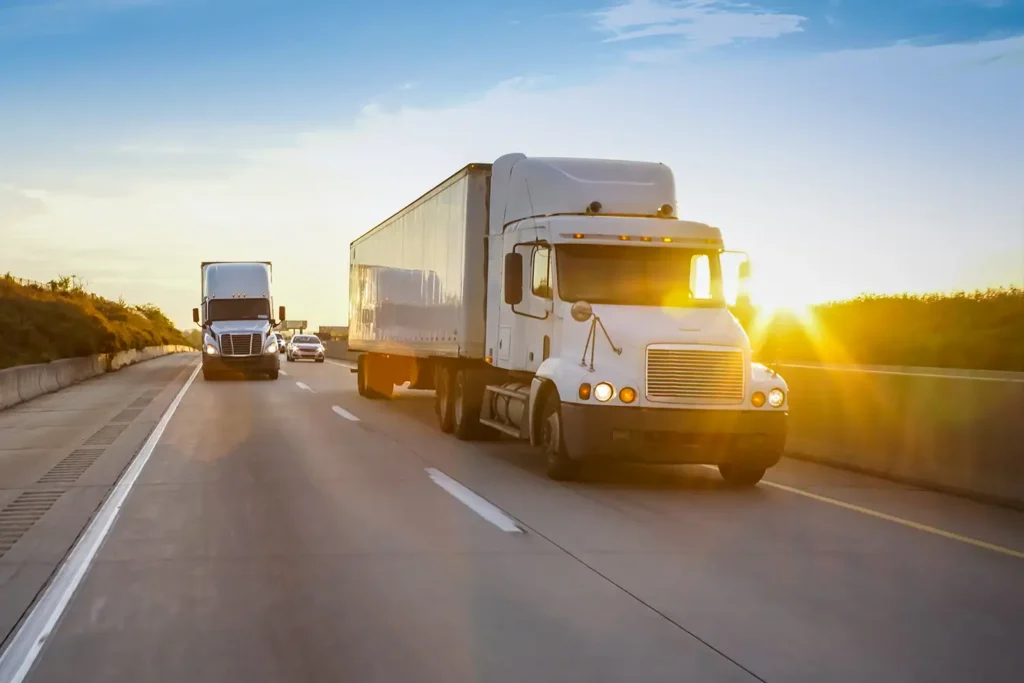
Picture this: a commercial carrier based in Barrie dispatches a straight truck loaded with high-value custom cabinetry destined for a hospitality renovation project in Muskoka. Along a narrow stretch of Highway 11, an unexpected washout forces the driver to brake sharply. The truck stays upright, and no other vehicles are involved, meaning your commercial auto policy is never triggered. Yet when the rear doors open at the delivery site, the load has shifted violently, leaving $45,000 worth of shattered glass and splintered millwork.
The shipper immediately demands full reimbursement. Your driver points out that the road condition caused the sudden stop, assuming your standard commercial fleet policy or general liability insurance will step in. Days later, you learn a painful truth: standard commercial auto insurance covers damage caused by your vehicle to others, while commercial general liability excludes goods in your care, custody, and control during transit. Without dedicated transportation legal liability coverage, your business is left facing a $45,000 invoice and potential breach-of-contract litigation on its own.
For trucking companies, freight brokers, couriers, and logistics operators across Orillia, Barrie, Midland, and Muskoka, moving goods carries far more exposure than simply keeping wheels turning safely. Every bill of lading represents a legal obligation to deliver freight intact and on time.
Understanding how transportation legal liability insurance functions, and where traditional fleet policies stop, is essential for keeping your commercial operations resilient.
What Is Transportation Legal Liability Insurance?
Transportation legal liability insurance (frequently referred to as Cargo Legal Liability or Motor Truck Cargo Legal Liability) protects carriers, freight forwarders, and logistics providers against financial loss when property belonging to a customer is lost, damaged, stolen, or destroyed while in their care, custody, and control during transit.
Under provincial and federal carriage laws, a commercial carrier is legally responsible for the safe transport of freight from the moment it is signed for at pickup until it is delivered and signed off at the destination. However, legal responsibility does not mean automatic insurance protection.
Unlike an “all-risk” shipper’s cargo policy, which pays regardless of fault, transportation legal liability responds when your business is held legally liable for the loss under the terms of your bill of lading, tariff, or freight contract. It also funds your legal defence costs if a customer or their insurer sues your company over damaged or missing goods.
According to Forrester Research, enterprise risk management decision-makers rank financial risk and operational risk among the top five enterprise risks facing organizations today, while noting that ecosystem risks—stemming from third-party relationships, supply chain dynamics, and logistics partnerships—often carry full financial responsibility even when external disruptions sit outside a company’s direct control. Having tailored legal liability protection ensures a single transit dispute does not derail your cash flow or managerial focus.
Why Standard Commercial Policies Leave Dangerous Gaps
Many fleet owners and delivery operators assume that carrying robust Commercial Auto Liability and Commercial General Liability (CGL) satisfies their contractual obligations. In practice, commercial insurance policies are designed with strict boundaries, so coverages do not overlap, leaving gaps if you do not have transportation-specific protection.
Commercial Auto Liability Stops at the Trailer W
Your mandatory Ontario commercial auto policy covers third-party bodily injury and property damage if your truck collides with another motorist, pedestrian, or roadside structure. It also covers physical damage to your own tractor or trailer if you carry collision and comprehensive endorsements. It does not cover the customer's goods sitting inside your cargo box or strapped to your flatbed.
Commercial General Liability Excludes Goods in Transit
A standard CGL policy protects your business against premises injuries (such as a visitor slipping at your Orillia terminal) or non-auto property damage caused by your operations. However, virtually every CGL form includes a strict "Care, Custody, and Control" exclusion alongside an automobile exclusion, eliminating coverage for freight being hauled, loaded, or unloaded by your vehicles.
Contractual Exposure Exceeds Statutory Limits
Under Ontario’s standard uniform conditions of carriage, a carrier’s default statutory liability is typically capped at $4.41 per kilogram ($2.00 per pound) unless a higher value is declared on the bill of lading. Today, shippers and supply chain partners routinely insert custom Master Service Agreements (MSAs) that waive statutory weight limits and hold carriers liable for full invoice value, replacement costs, or consequential delay penalties. If your policy is not aligned with your contracts, you carry the uninsured difference
Comparing Commercial Transportation Coverages
To clarify how transportation legal liability fits within a complete commercial fleet program, review how each core policy responds to common operational incidents:
| Operational Incident | Commercial Auto Liability | Commercial General Liability (CGL) | Transportation / Cargo Legal Liability |
|---|---|---|---|
| Your driver rear-ends a passenger car on Highway 400 | Covered (Third-Party Liability) | Excluded | Excluded |
| Customer freight is damaged after a sudden brake or load shift | Excluded | Excluded | Covered (Up to Policy Limit) |
| A client slips and falls inside your Midland warehouse office | Excluded | Covered (Premises Liability) | Excluded |
| High-value cargo is stolen from a locked trailer at a rest stop | Excluded | Excluded | Covered (Subject to Security Warranties) |
| Legal defence fees when a shipper sues over damaged inventory | Excluded (Unless Auto Collision) | Excluded | Covered |
| Repairing collision damage to your own truck or trailer | Covered (Only with Physical Damage Add-on) | Excluded | Excluded |
Key Scenarios Covered by Transportation Legal Liability
Transportation risks evolve as quickly as the supply chains you serve. A well-structured transportation legal liability policy addresses a wide spectrum of real-world transit exposures across Central Ontario and cross-border corridors:
- Collision, Overturn, and Road Hazards: Damage to hauled goods caused by highway accidents, jackknifing, sharp evasive manoeuvres, or shifting loads on winding regional routes.
- Theft, Pilferage, and Hijacking: Loss of entire trailer loads or high-demand retail goods stolen while parked overnight or during scheduled rest stops.
- Fire, Smoke, and Weather Events: Freight ruined by trailer fires, lightning, windstorms, or water intrusion during severe Georgian Bay snow squalls and torrential rainstorms.
- Loading and Unloading Operations: Accidental drops, forklift impacts, or crushing damage occurring while your crew actively loads or unloads freight at a customer dock.
- Refrigeration Breakdown (Reefer Coverage): Spoilage of temperature-sensitive food, agricultural products, or pharmaceuticals caused by mechanical failure of a refrigeration unit.
- Debris Removal and Earned Freight: Costs required to clean up spilled cargo after a highway accident, as well as reimbursement for unpaid freight charges you can no longer collect because the shipment was destroyed.
Common Exclusions and Policy Conditions to Watch
Because transportation legal liability underwrites the specific goods you haul and how you manage them, policies contain strict terms and exclusions. Overlooking a single warranty can jeopardize an otherwise valid claim.
- Unattended Vehicle Warranties: Many cargo policies restrict theft coverage if a loaded truck or trailer is left unattended without locked doors, kingpin locks, or parked outside a fenced, well-lit yard.
- Excluded High-Risk Commodities: Standard policies frequently exclude cash, bullion, jewelry, fine art, live animals, hazardous materials, and certain electronics unless specifically scheduled and approved by the underwriter.
- Inherent Vice and Improper Packaging: If goods spoil naturally due to pre-existing defects or break because the shipper packed them inadequately without your driver’s knowledge, legal liability generally does not apply.
- Delay and Loss of Market: Financial losses resulting solely from a late delivery, without physical damage to the cargo, are typically excluded unless specialized contingent endorsements are arranged.
- Subcontractor and Contingent Liability Gaps: If you operate as a freight broker or subcontract overflow loads to independent owner-operators, your primary carrier policy may not respond when a third-party carrier’s insurance lapses. You require Contingent Cargo Liability to bridge that exposure.
According to Forrester Research, rising complexity in less-than-truckload (LTL) consolidation, terminal congestion, and multi-hub transfers significantly elevates the risk of freight damage, loss, or delays—whereas direct, single-handling shipments reduce exposure. Auditing your bills of lading, transfer protocols, and policy warranties before a shipment leaves the dock is one of the highest-impact steps a logistics operator can take.
Navigating Regional Transportation Risks in Simcoe County and Muskoka
Operating a transportation, distribution, or contracting fleet out of Orillia, Barrie, Midland, or Muskoka introduces distinct geographical and seasonal variables that generic, one-size-fits-all policies often miss:
- Seasonal Tourism and Cottage Country Freight: Summer tourism brings heavy construction materials, marine equipment, landscaping supplies, and hospitality goods into Muskoka’s cottage corridors, where narrow roads, low-hanging branches, and gravel driveways elevate cargo-shift and unloading hazards.
- Severe Winter Weather Corridors: Highway 400 and Highway 11 sit directly in the path of intense lake-effect snow squalls off Lake Simcoe and Georgian Bay. Sudden whiteouts increase the likelihood of multi-hour highway closures, raising spoilage risks for temperature-sensitive freight, as well as jackknife and rollover incidents.
- Mixed Commercial Operations: Many local businesses in Simcoe County operate hybrid fleets, combining manufacturing, wholesale distribution, or contracting with dedicated delivery vehicles. Ensuring your policy accurately classifies whether you are hauling your own goods (Shipper’s Interest / Motor Truck Owners’ Goods) or third-party freight for hire (Motor Truck Cargo Legal Liability) is critical.
Practical Steps to Reduce Legal Liability Claims
Insurance protects your business from major financial losses, but good risk management can help keep your premiums more predictable and protect your reputation with shippers. Consider making these practices part of your day-to-day fleet operations:
- Standardize Driver Inspection and Securement Logs: Require drivers to photograph load securement before closing trailer doors and at every major checkpoint, documenting that freight was properly blocked, braced, and tarped.
- Clarify Declared Values on Bills of Lading: Train dispatchers and drivers to flag shipments where customers write declared values above statutory weight limits, ensuring your insurance limits match the exposure before wheels roll.
- Verify Subcontractor Certificates of Insurance (COIs): Never tender a load to a partner carrier without obtaining an up-to-date COI directly from their insurance broker confirming active cargo and auto liability limits.
- Upgrade Yard and Trailer Security: Equip commercial units with GPS telematics, heavy-duty padlocks, and air-cuff locks, and establish approved secure parking protocols along regular transit lanes.
Frequently Asked Questions About Transportation Legal Liability
Lorem ipsum dolor sit amet, consectetur adipiscing elit. Ut elit tellus, luctus nec ullamcorper mattis, pulvinar dapibus leo.
Who needs transportation legal liability insurance in Ontario?
Any business responsible for transporting goods belonging to others, including trucking companies, owner-operators, couriers, moving companies, freight forwarders, and logistics providers, needs transportation legal liability coverage. Businesses that haul their own high-value inventory or equipment between job sites also require tailored transit coverage to protect owned goods in motion.
How much transportation legal liability coverage does my business need?
Coverage limits depend on the maximum value of a single load, the types of commodities you haul, and the contractual minimums mandated by your shippers or freight brokers. While many regional operators start at $100,000 to $250,000 per load, carriers moving pharmaceuticals, specialized machinery, or electronics often require $500,000 to $1,000,000 or more.
Does transportation legal liability cover legal fees if a customer sues us?
Yes. A comprehensive cargo legal liability policy covers legal defence costs, investigation expenses, and court fees incurred when defending your business against claims for lost or damaged freight, even if the lawsuit is ultimately found to be groundless.
What is the difference between Cargo Legal Liability and Contingent Cargo Insurance?
Cargo Legal Liability protects motor carriers while freight is physically in their own care, custody, and control. Contingent Cargo Insurance protects freight brokers and 3PLs who arrange shipping through third-party carriers, stepping in as a financial backstop if the hired carrier’s primary cargo policy denies a claim or lacks sufficient limits.
Partner With a Local Broker Who Understands Commercial Transportation
Your commercial vehicles and freight contracts are the engine of your business. Whether you run a single delivery truck out of Orillia, manage a regional fleet in Barrie or Midland, or coordinate logistics across Muskoka and beyond, a single uncovered cargo dispute can threaten years of hard work.
As a independently-owned insurance broker serving Ontario since 1922, McLean & Dickey works for you. Because we partner with a broad network of top-name Canadian commercial insurers, our advisors take the time to review your bills of lading, shipper contracts, and fleet routes to build transportation legal liability coverage that eliminates hidden gaps at a competitive price.
When an unexpected claim happens on the road, you have a dedicated local advocate in your corner to help navigate paperwork, deal with adjusters, and protect your business relationships.
Reach out to our commercial insurance team today to review your current fleet and cargo policies. Contact McLean & Dickey for a personalized transportation insurance quote and keep your business moving with confidence.