
Picture walking into your office on a Monday morning, turning on your computer, and finding every patient file, project estimate, or client invoice locked behind a ransom demand. When you ask, “What does a cyber insurance policy actually cover?” the answer comes down to two main buckets: the immediate costs your own business pays to recover and the legal or regulatory claims others bring against you, alongside a separate section for payment fraud that catches many owners off guard.
According to the 2026 Microsoft Digital Defense Report, Microsoft detected more than 46 million business email impersonation attacks over a 12-month period, and 63% of observed intrusions involved data theft (Microsoft Digital Defense Report 2026). Meanwhile, Insurance Bureau of Canada (IBC) survey data shows that fewer than half (48%) of Canadian small and medium-sized enterprises have implemented cyber defences, and just 22% carry cyber insurance (Insurance Bureau of Canada).
At McLean & Dickey, an Orillia insurance broker operating since 1922, we review cyber policy wording side-by-side across insurers so Ontario businesses in Orillia, Barrie, Midland, and Muskoka can see which scams and recovery costs are genuinely protected before an incident happens.
What Cyber Insurance Covers
Cyber insurance covers the costs a business faces after a cyber incident. First-party coverage pays your own costs, such as forensic investigation, data recovery, lost income, and ransomware response. Third-party coverage pays for claims against you, such as privacy lawsuits and regulatory proceedings. Payment fraud is often covered separately, with its own limit.
Think of first-party coverage as paying for “your costs” to get the doors back open, while third-party coverage pays for “what others claim from you” when a breach harms clients or partners. This breakdown is designed for Ontario small business owners and office managers comparing quotes or reviewing an existing cyber liability insurance policy, including trade contractors, clinics, professional offices, and retailers.
Why doesn’t your standard business insurance handle this? Commercial General Liability (CGL) and commercial property policies are primarily designed for bodily injury and tangible property damage, so electronic data loss, cyber extortion and payment fraud fall outside standard coverage. A standalone cyber policy can bring these protections together, including coverage for funds transfer fraud caused by social engineering. Knowing the standard components of a cyber liability policy makes it easier to spot gaps in your existing coverage.
First-Party Coverage: Costs to Your Business
Most cyber insurance policies separate first-party costs, which are your own losses, from third-party liability, which is claims made against you by customers, partners, or regulators. As outlined in the Government of Canada’s Get Cyber Safe baseline guidance, first-party protection funds your immediate operational recovery:
- Incident Response and Breach Coach: Pays for a specialized privacy lawyer (often called a breach coach) who coordinates your legal obligations, hires technical vendors, and keeps the investigation under solicitor-client privilege. Ontario example: An Orillia accounting firm discovers unauthorized access to its tax portal and immediately engages a breach coach to manage Ontario and federal reporting rules.
- IT Forensics: Covers digital forensic investigators who determine how attackers entered your network, what files they viewed, and whether malware remains active. Ontario example: A Barrie dental office hires forensic specialists to confirm whether patient X-rays and health histories were merely encrypted or actually copied out of the server.
- Data and System Restoration: Pays the technical labour costs to clean infected machines, rebuild corrupted software, and restore backups. Ontario example: A Midland manufacturing shop restores its computer-aided design files and production schedules from clean backups after a server crash.
- Business Interruption: Reimburses lost net income and ongoing fixed expenses (like payroll and rent) while your systems are offline, once a policy waiting period passes. Ontario example: A Muskoka resort loses four days of peak summer reservations after an attack takes down its online booking engine.
- Cyber Extortion and Ransomware: Covers extortion specialists, ransom negotiation fees, and—where legally permitted and approved by the insurer—extortion payments to unlock critical systems. Ontario example: A regional logistics company relies on an insurer-appointed negotiator to communicate with attackers who locked its dispatch software.
- Breach Notification and Credit Monitoring: Funds the mandatory mailing or emailing of breach notices to affected individuals, call-centre support, and credit monitoring subscriptions. Ontario example: A Barrie retail store pays to notify 2,500 loyalty members and provide 12 months of credit monitoring after its point-of-sale database is compromised.
- Crisis Communications and Public Relations: Pays for PR specialists to help manage reputational fallout and communicate clearly with clients and local media. Ontario example: A private health clinic hires a communications firm to reassure patients and referring physicians after an outage makes local headlines.
Third-Party Coverage: Claims Against Your Business
When a security failure exposes client data or spreads malware to a partner’s network, third-party liability steps in to pay legal defence costs, settlements, and court-awarded damages:
- Privacy Liability: Covers lawsuits and demands from customers, patients, or employees alleging you failed to safeguard their personal or confidential information.
- Network Security Liability: Protects you if your compromised email server or system inadvertently transmits a virus or malicious link that damages a client’s or vendor’s network.
- Regulatory Defence and Penalties: Pays legal fees to represent your business during government privacy investigations. Under the Personal Information Protection and Electronic Documents Act (PIPEDA), the Office of the Privacy Commissioner of Canada (OPC) requires organizations to report a breach when it creates a “real risk of significant harm” to individuals and keep records of all breaches for two years.
- PCI Fines and Assessments: Covers contractual fines and forensic audit costs levied by payment card brands if a breach exposes customer credit or debit card numbers.
- Media Liability: Defends against claims of defamation, copyright infringement, or privacy invasion stemming from content published on your business website or social media channels.
Payment Fraud and Social Engineering Coverage
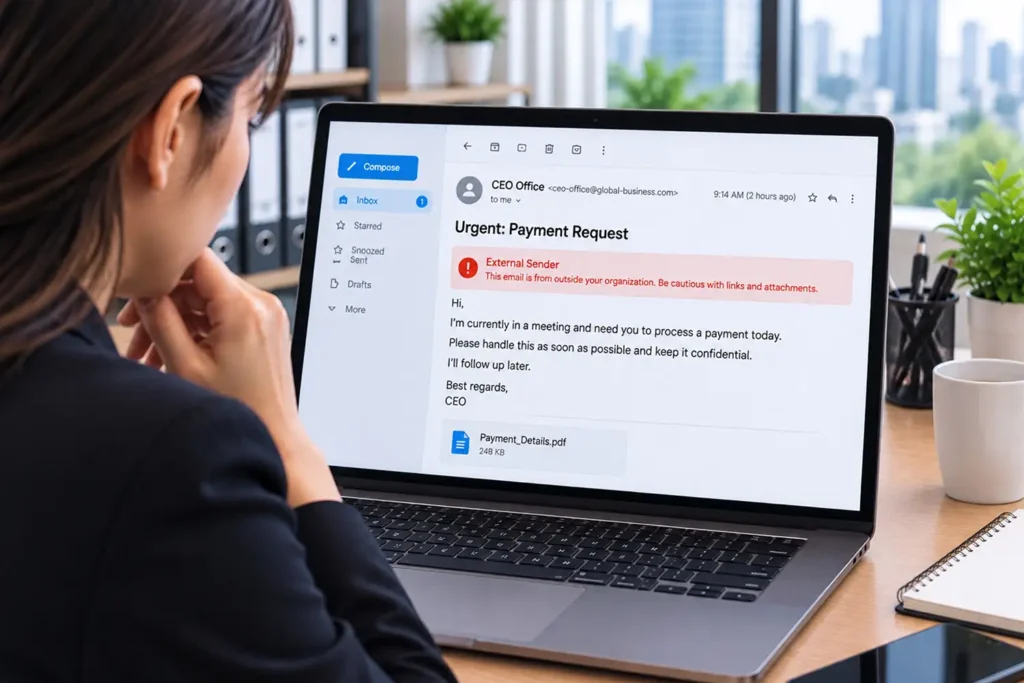
Social engineering attacks are effective because they often look like routine business communications. A supplier may appear to request new banking details, an executive may seem to authorize an urgent transfer, or an employee may click a convincing phishing link. One common misconception is that cyber insurance will not respond when an employee makes a mistake or is deceived by a social engineering attack. In fact, cyber policies generally include coverage for social engineering and funds transfer fraud, including situations where an employee is tricked into sending company money to an unintended third party. With AI making these scams more sophisticated and easier to scale, having this coverage is increasingly important. Limits, deductibles and terms vary by insurer, so it is important to review the policy wording.
CFC Underwriting’s research highlights a significant gap between the risks businesses face and what they believe cyber insurance covers. Only 30% of SMEs identify phishing and social engineering as a major threat. AI acts as a catalyst to make attacks more realistic and harder for businesses to identify, while lowering the barrier to entry for prospective threat actors. In fact, social engineering led to 75% of CFC’s claims in 2025.
CFC case study: Poached Payment
After an employee at a small insurance brokerage was enticed to enter their credentials on a fraudulent document-sharing page, a fraudster gained access to the employee’s email account. Using the compromised account, the fraudster sent a client false banking instructions that redirected a $14,580 premium payment to another account. The fraudster also diverted the client’s incoming emails to prevent the brokerage from discovering the scam.
When the loss was discovered, the brokerage accepted responsibility and paid the premium from its own funds. It then recovered the loss under its cyber policy.
Which Coverage Responds to Common Cyber Scenarios
Because a single attack can trigger multiple parts of a policy, or hit an unexpected sublimit, this scenario map shows how standard coverage responds in real situations:
| Cyber Scenario | Which Coverage Responds | Common Policy Catch to Watch For |
|---|---|---|
| Ransomware locks out your servers | First-party cyber extortion, IT forensics, data restoration, and business interruption. | Ransom payment requires prior insurer consent and legal sanctions checks; business interruption has a waiting period. |
| Laptop with unencrypted client files is stolen | First-party breach response, forensics, notification, and third-party privacy liability. | Several Canadian insurers exclude lost or stolen portable devices unless the hard drive was encrypted. |
| Bookkeeper pays a fake vendor invoice | Cybercrime coverage for funds transfer fraud, including social engineering. | Check the applicable limit, deductible and policy conditions. Some insurers require businesses to confirm payment instructions through a trusted contact method before sending funds. |
| Spoofed CEO email requests an urgent wire | Cybercrime coverage for funds transfer fraud, including social engineering. | Check the applicable limit, deductible and policy conditions which can vary by insurer. |
| Caller impersonates IT support or your bank | Cybercrime coverage if the deception results in a transfer of company funds, or incident response coverage if the caller gains access to systems. | Voice-based scams rely on human manipulation; learn how to shield your business from vishing scams with strict verification rules. |
How a Cyber Insurance Claim Is Paid
Understanding the sequence of a claim takes the guesswork out of an emergency. When an incident happens, your policy typically responds in the following order:
Report the incident immediately
Call the insurer’s 24/7 breach response hotline and alert your broker before hiring outside IT contractors on your own.
Engage the breach coach and forensics
The insurer appoints a breach coach and forensic team, paid under your first-party incident response coverage.
Contain and restore systems
Technical specialists isolate the threat and rebuild your software and files, paid under data restoration coverage.
Calculate lost revenue
Once your downtime exceeds the policy's waiting period, your accountant and the insurer's forensic accountants calculate lost net income under business interruption coverage.
Notify affected individuals
If exposed personal data creates a real risk of significant harm under PIPEDA, the breach coach coordinates notices and credit monitoring under privacy breach response coverage.
Defend legal or regulatory actions
If clients sue or the Privacy Commissioner opens an inquiry, legal counsel is funded under third-party liability coverage.
Assess payment fraud losses
If money was transferred to a scammer, the adjuster reviews how the fraud occurred and applies the relevant cybercrime coverage, limit, deductible and policy conditions.
What Cyber Insurance Usually Doesn't Cover
Policy wordings vary across insurers, so reading the exclusions section is just as important as reading the coverage summary. Most policies exclude:
- Known Prior Acts: Incidents, threats, or vulnerabilities you knew about before the policy’s inception date.
- Failure to Maintain Required Controls: Losses resulting from failing to keep security measures you promised on your application, such as multi-factor authentication (MFA) or regular offline backups, active.
- Unencrypted Portable Devices: Stolen laptops, phones, or USB drives containing sensitive data if the insurer’s wording mandates encryption.
- Bodily Injury and Tangible Property Damage: Physical injuries or fire/water damage to physical hardware, which belong on your CGL or commercial property policy.
- Betterment and System Upgrades: The cost of upgrading your computers or software to a better, more expensive state than existed before the attack.
- War and Hostile State-Actor Wording: Large-scale cyber warfare or state-sponsored attacks designated under specific war exclusions (though many modern policies carve back coverage for widespread malware).
- Uninsurable Fines: Criminal fines or statutory penalties that provincial or federal law prohibits insurers from paying on your behalf.
Limits, Sublimits, and Deductibles Explained
When comparing quotes, the headline limit (such as $1,000,000) does not mean every type of loss gets a million dollars. Your policy uses three numbers to divide up how claims get paid:
- Aggregate Limit: The maximum total amount the insurer will pay for all covered claims combined during a single policy year.
- Sublimits: Smaller dollar caps or limits may be placed on specific risks such as social engineering fraud, reputational harm, or hardware bricking. Check the amount provided by each insurer.
- Retention (Deductible) and Waiting Period: The dollar amount you pay out of pocket before coverage kicks in, paired with a time deductible (often 8 to 12 hours) for business interruption.
An Example in Round Numbers
Suppose a Barrie clinic carries a $1,000,000 aggregate cyber limit with a $5,000 deductible and a 12-hour business interruption waiting period.
A phishing attack locks the clinic’s scheduling software for 36 hours and tricks a staff member into paying a fake $65,000 equipment invoice. The payment fraud portion would be reviewed under the policy’s cybercrime or funds transfer fraud coverage and its applicable limit.
- Forensics and Data Restoration ($40,000): Covered under the main $1,000,000 limit, minus the $5,000 deductible ($35,000 paid by insurer).
- Business Interruption ($12,000 lost net income over 36 hours): The first 12 hours fall inside the waiting period ($4,000 absorbed by the clinic), and the remaining 24 hours ($8,000) are paid under the main limit.
- Fake Invoice Payment ($65,000): Reviewed under the policy’s cybercrime or funds transfer fraud coverage. The amount reimbursed would depend on the applicable limit, deductible and policy terms.
Business Cyber Insurance vs. Home Policy Cyber Add-Ons
Business owners occasionally ask whether a cyber endorsement on their personal home insurance, or a small extension on a commercial package policy, is enough. Personal home cyber add-ons are designed strictly for household risks, such as personal identity theft, home computer malware, and online harassment. If you are looking to protect your household, explore our tips on 5 smart ways to protect yourself from identity theft.
A personal policy will not pay for lost business revenue, commercial payroll, client privacy lawsuits or fraudulent vendor wire transfers. A limited cyber add-on within a commercial package may also provide less protection than a standalone policy. Compare the incident response services, business interruption coverage, cybercrime wording and payment fraud limit to understand how the policy responds to social engineering and other cyber losses.
Coverage Checklist: What to Confirm in Your Policy
Before binding a policy or signing a renewal, ask your broker to verify these eight items in the insurer’s wording:
| Coverage Area | What to Confirm in Your Wording |
|---|---|
| Incident Response | Is there a 24/7 breach hotline with a pre-approved breach coach, and are those fees paid outside or inside your policy limit? |
| Business Interruption | How short is the waiting period (e.g., 8 or 12 hours), and how many days does the indemnity period run? |
| Data Restoration | Does coverage pay only to restore backed-up data, or does it also cover rebuilding corrupted software applications? |
| Cyber Extortion | Are ransom negotiator fees included, and what approval steps are required before an extortion payment is made? |
| Social Engineering Fraud | Does the cybercrime section cover phishing, vishing and other social engineering attacks that cause an employee to transfer company funds? Confirm the applicable limit, deductible and any policy conditions. |
| Privacy & Regulatory Defence | Does the wording explicitly reference Canadian privacy statutes like PIPEDA and provincial health privacy laws (such as Ontario's PHIPA)? |
| Dependent Business Interruption | Are you covered if an outage at a third-party cloud host, payroll provider, or software vendor halts your operations? |
| PCI Fines & Assessments | If your business accepts credit or debit cards, are payment card industry fines and forensic audits covered? |
Cyber Insurance Coverage FAQ
What does cyber insurance typically cover?
Cyber insurance typically covers two categories of loss: first-party costs to your own business (such as IT forensics, data recovery, breach notification, ransomware response, and lost income during downtime) and third-party liability claims against you (including customer privacy lawsuits, network security claims, and regulatory defence costs).
What is not covered by cyber insurance?
Cyber insurance usually excludes cyber incidents you knew about before buying the policy, physical bodily injury or property damage, and the cost of upgrading outdated hardware or software beyond its pre-attack condition. Many policies also exclude losses from unencrypted stolen laptops or failing to maintain required security controls like multi-factor authentication.
Does cyber insurance cover ransomware payments?
Most standalone cyber policies include cyber extortion coverage for ransom negotiators and extortion payments, provided the insurer approves the payment in advance and the transaction complies with Canadian sanctions laws. Because ransom payments are never guaranteed or automatic, insurers focus heavily on forensic recovery and restoring systems from clean backups first.
What is the difference between first-party and third-party cyber coverage?
First-party coverage pays directly for your own business expenses after an attack, including forensic investigators, legal breach coaches, system restoration, and lost revenue while offline. Third-party coverage defends and settles claims brought against your business by external parties—such as affected customers, business partners, or privacy regulators—following a breach.
Does my home or business package policy already include cyber coverage?
A personal home insurance cyber add-on covers household identity theft and personal devices, not commercial operations or client data. Some commercial package policies include limited cyber coverage, but they may not provide the breadth of a standalone cyber policy, including 24/7 incident response, meaningful business interruption protection and cybercrime coverage for payment fraud. Review the actual wording and limits with your broker to understand exactly how the policy responds.
Review Your Cyber Coverage with a Local Broker
Cyber policies can look similar on a one-page quote summary, but important differences may be found in the limits, deductibles, conditions and scope of cybercrime coverage. As an Orillia insurance brokerage serving businesses across Orillia, Barrie, Midland, and Muskoka since 1922, McLean & Dickey shops multiple top-name insurers on your behalf and walks you through policy wordings to make sure your business has the coverage it needs.
If you would like a clear, no-obligation review of your current coverage or a standalone cyber quote tailored to your operations, reach out to our commercial team today:
- Request a Quote Online: Contact Us
- Visit Our Office: 4 King Street, Orillia, ON L3V 1R1
- Call Us Directly: 705.325.4461